
Naturalness is a complex appearance attribute that is dependent on multiple visual appearance attributes like color, gloss, roughness, and their interaction. It impacts the perceived quality of an object and should therefore be reproduced correctly. In recent years, the use of color 3D printing technology has seen considerable growth in different fields like cultural heritage, medical, entertainment, and fashion for producing 3D objects with the correct appearance. This paper investigates the reproduction of naturalness attribute using a color 3D printing technology and the naturalness perception of the 3D printed objects. Results indicate that naturalness perception of 3D printed objects is highly subjective but is found to be objectively dependent mainly on a printed object’s surface elevation and roughness.
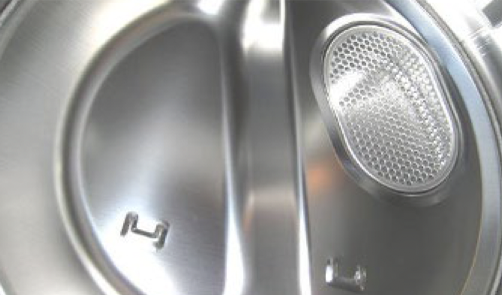
We consider a method for reconstructing the original HDR image from a single LDR image suffering from saturation for metallic objects. A deep neural network approach is adopted for directly mapping from 8-bit LDR image to an HDR image. An HDR image database is first constructed using a large number of objects with different shapes and made of various metal materials. Each captured HDR image is clipped to create a set of 8-bit LDR images. The whole pairs of HDR and LDR images are separated and used to train and test the network. Next, we design a deep CNN in the form of a deep auto-encoder architecture. The network was also equipped with skip connections to keep high image resolution. The CNN algorithm is constructed using MATLAB's machine-learning functions. The entire network consists of 32 layers and 85,900 learnable parameters. The performances of the proposed method are examined in experiments using a test image set. We also compare our method with other methods. It is confirmed that our method is significantly superior in reconstruction accuracy and the good histogram fitting.
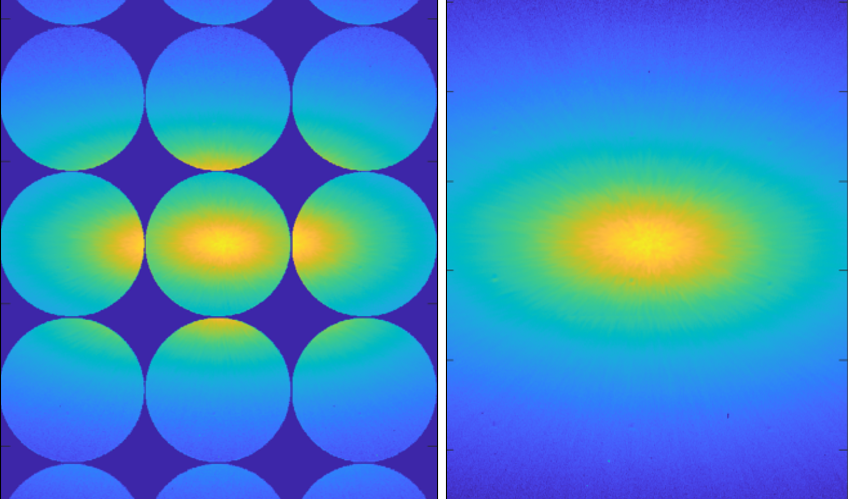
The measurement of specular gloss using a glossmeter is normalized in the ISO 2813 Standard, which is widely used for many industrial applications. In practice, the principle of the measurement relies on using a primary standard that approximates a perfectly polished back glass surface and an optical design where rectangular diaphragms are used for the source and detection apertures. Any deviation in the refractive index or the polishing level of the standard artefact, or in the machining of the rectangular diaphragms ends in measurement uncertainties. To tackle these issues, we propose to calculate the specular gloss from the bidirectional reflectance distribution function (BRDF) measured using a goniospectrophotometer equipped with a conoscopic detection. With such an instrument, no calibration sample is needed anymore, and the geometry of measurement given in the standard can be applied with good accuracy. The method has been implemented and tested on samples of various gloss values.
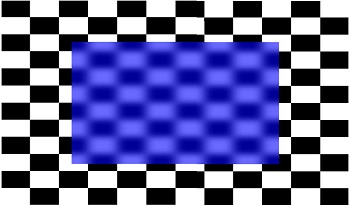
Translucency is an appearance attribute, which primarily results from subsurface scattering of light. The visual perception of translucency has gained attention in the past two decades. However, the studies mostly address thick and complex 3D objects that completely occlude the background. On the other hand, the perception of transparency of flat and thin see-through filters has been studied more extensively. Despite this, perception of translucency in see-through filters that do not completely occlude the background remains understudied. In this work, we manipulated the sharpness and contrast of black-and-white checkerboard patterns to simulate the impression of see-through filters. Afterward, we conducted paired-comparison psychophysical experiments to measure how the amount of background blur and contrast relates to perceived translucency. We found that while both blur and contrast affect translucency, the relationship is neither monotonic, nor straightforward.
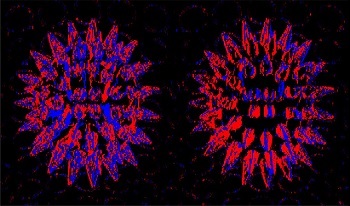
The visual mechanisms behind our ability to distinguish translucent and opaque materials is not fully understood. Disentanglement of the contributions of surface reflectance and subsurface light transport to the still image structure is an ill-posed problem. While the overwhelming majority of the works addressing translucency perception use static stimuli, behavioral studies show that human observers tend to move objects to assess their translucency. Therefore, we hypothesize that translucent objects appear more translucent and less opaque when observed in motion than when shown as still images. In this manuscript, we report two psychophysical experiments that we conducted using static and dynamic visual stimuli to investigate how motion affects perceived translucency.

Color imaging has historically been treated as a phenomenon sufficiently described by three independent parameters. Recent advances in computational resources and in the understanding of the human aspects are leading to new approaches that extend the purely metrological view of color towards a perceptual approach describing the appearance of objects, documents and displays. Part of this perceptual view is the incorporation of spatial aspects, adaptive color processing based on image content, and the automation of color tasks, to name a few. This dynamic nature applies to all output modalities, including hardcopy devices, but to an even larger extent to soft-copy displays with their even larger options of dynamic processing. Spatially adaptive gamut and tone mapping, dynamic contrast, and color management continue to support the unprecedented development of display hardware covering everything from mobile displays to standard monitors, and all the way to large size screens and emerging technologies. The scope of inquiry is also broadened by the desire to match not only color, but complete appearance perceived by the user. This conference provides an opportunity to present, to interact, and to learn about the most recent developments in color imaging and material appearance researches, technologies and applications. Focus of the conference is on color basic research and testing, color image input, dynamic color image output and rendering, color image automation, emphasizing color in context and color in images, and reproduction of images across local and remote devices. The conference covers also software, media, and systems related to color and material appearance. Special attention is given to applications and requirements created by and for multidisciplinary fields involving color and/or vision.

Gloss perception is a complex psychovisual phenomenon, whose mechanisms are not yet fully explained. Instrumentally measured surface reflectance is usually poor predictor of human perception of gloss. The state-of-the-art studies demonstrate that, in addition to surface reflectance, object's shape and illumination geometry also affect the magnitude of gloss perceived by the human visual system (HVS). Recent studies attribute this to image cues – the specific regularities in image statistics that are generated by a combination of these physical properties, and that, in their part, are proposedly used by the HVS for assessing gloss. Another study has recently demonstrated that subsurface scattering of light is an additional factor that can play the role in perceived gloss, but the study provides limited explanation of this phenomenon. In this work, we aimed to shed more light to this observation and explain why translucency impacts perceived gloss, and why this impact varies among shapes. We conducted four psychophysical experiments in order to explore whether image cues typical for opaque objects also explain the variation of perceived gloss in translucent objects and to quantify how these cues are modulated by the subsurface scattering properties. We found that perceived contrast, coverage area, and sharpness of the highlights can be combined to reliably predict perceived gloss. While sharpness is the most significant cue for assessing glossiness of spherical objects, coverage is more important for a complex Lucy shape. Both of these observations propose an explanation why subsurface scattering albedo impacts perceived gloss.
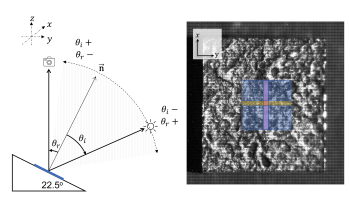
Materials with special appearance properties such as goniochromatic materials require complex bidirectional measurements to properly characterise their colour and gloss. Normally, these measurements are performed by goniospectrophotometers which are expensive and not commonly available. In this paper a flexible imaging system composed of a snapshot multispectral camera and a light source attached to a robotic arm, is used to obtain HDR BRDF measurements of patinas commonly used in cultural heritage objects. The system is evaluated by comparing the results to those of a commercially available goniospectrophotometer. It is found that with a known uncertainty, the system is capable of producing accurate measurements of samples with a roughness equal or lower than 6.19 μm. For roughnesses higher that 12.48 μm, the accuracy of the system decreases. Moreover, it is found that the size and orientation of the region of interest plays a great influence on the precision of the imaging system.
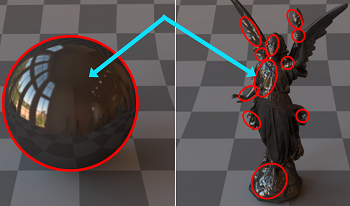
Gloss is an important appearance attribute, and its exact perceptual mechanisms are yet to be fully understood. Previous works attempted to model the relationship between optical and perceptual gloss. The state-of-the-art studies demonstrate that the human visual system has a poor ability to recover surface reflectance and perceived gloss rather depends on image cues that are generated by a complex interaction among optical material properties, illumination, object shape, and its surface geometry. Therefore, perceptual models defined on a particular shape, such as a sphere, may not generalize to other objects. To investigate shape-specific differences, we conducted a psychophysical experiment with a simple sphere and complex Lucy shapes. We scaled the magnitude of apparent gloss to study how the shape affects perceived gloss, and how the role of optical material properties varies between the shapes. We observed significant cross-shape differences, which we argue can be explained by the analysis of the image cues.
Material appearance is a perceptual phenomenon that the brain interprets from the retinal image. Though, it is not easy to analyze what features of optical images are effectively related to the stimulus inside the visual cortex. For this reason, an intuitive or heuristic approach has been taken to simulate the material appearance. The simulation results are expected to drive innovation for not only traditional craft or plastic arts industry but also more realistic picture displays on 4K/8K HDTV and Virtual Reality or Computer Graphics. Optical surface property of material is modeled by BRDF (Bidirectional Reflectance Distribution Function). Specular S and Diffusion D components are responsible for the "glossiness" and "texture" and are used to emphasize the material appearance by simply adjusting the mixing ratio. This study introduces the following two key models to emphasize the material appearance of a given image without using such measuring means as BRDF and discusses how they work individually and cooperatively. (1) α-based Dehazing model to emphasize clarity, wetness, gloss. (2) β-based Contrast model to emphasize texture, roughness.