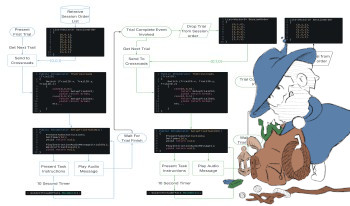
VR research rarely fails in dramatic ways. It frays in the margins. It slips. It drifts. A timestamp is off. A controller desyncs for a moment. A study crashes right as a participant reaches the final task. These moments feel small and forgettable, yet they accumulate. In this paper, we present an exploration into the fusion of Fulcrum, a generalized support system for user-facing studies, and a new and improved ScryVR, a Unity package built to support user-facing VR studies. The combined system offers clear templates, organized study structures, and simple building blocks that help researchers understand and adjust their experiments without getting lost in technical details. To evaluate this solution, two case studies were conducted with this setup as the main tool in their experiment. Ultimately, the system effectiveness greatly streamlined VR setup and automated many crucial aspects of experiment facilitation. However, limitations were made clear primarily in robust error reporting systems, which report in real time and a more diverse solution for analytical tasks.
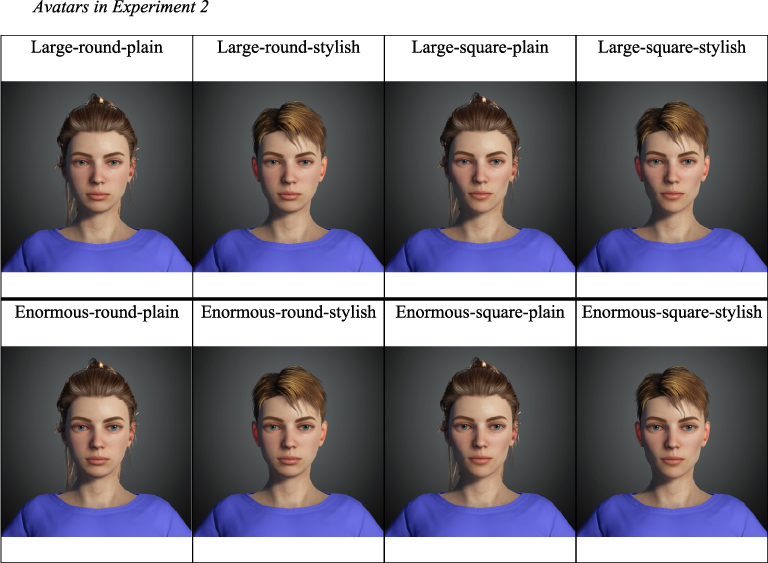
This article examines the influence of facial features on the perception and evaluation of avatars in virtual environments. As people increasingly engage with avatars in virtual spaces, the visual appearance of these digital representations is critical to the design of human-computer interaction. Drawing on research on the evaluation of human faces, this study investigates how facial features influence perceptions of an avatar’s attractiveness, trustworthiness, personality traits, and other characteristics. We conducted two factorial experiments that manipulated the avatars’ eye size, jaw shape, and hairstyle. It was found that larger eyes conveyed a more positive impression and increased perceptions of attractiveness, sympathy, trustworthiness, extraversion, and openness. Although avatars with prominent jawlines were rated as more attractive, a prominent jawline was associated with a perception of higher dominance and threat. Stylish hairstyles were associated with higher extraversion and openness but also with lower conscientiousness. This study provides important insights into the design of avatars for virtual applications like gaming, e-commerce, and online therapy. It highlights the complex interplay between facial features and perception and contributes to the knowledge of how avatars can be optimally designed to create the desired impressions in virtual environments.