 Find this author on Google Scholar
 Find this author on PubMed
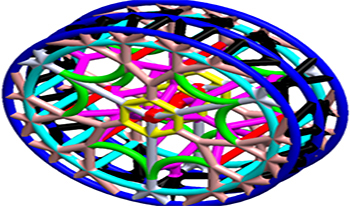
This study develops a lightweight bionic energy-absorbing structure (loofah sponge bionic structure [LSBS]), inspired by the highly porous loofah sponge, suitable for additive manufacturing. The loofah sponge is partitioned into four functional regions and characterized by regional compression tests, based on which eleven main characteristic structures are extracted and integrated into a parametric 3D model. Finite element simulations in ANSYS Workbench 15.0, combined with structural specific strength and structural specific stiffness indices, are used to evaluate lightweight performance under static and compressive loading. The LSBS specimens are fabricated by DLP (UV-curable resin [UVCR]) and FDM (PLA) and tested in quasi-static compression. The PLA-LSBS exhibits markedly higher energy absorption than UVCR-LSBS, attaining 4.39 J⋅g−1 mass-specific energy absorption and 5.48 J⋅cm−3 volume-specific energy absorption, with a 135.10% higher peak load and only 0.83 g extra mass. These results verify the effectiveness of the extracted loofah-inspired features and demonstrate a feasible pathway for designing lightweight, high-energy-absorbing structures via 3D printing.
Linlin Liu, Silong Liu, Shaoxue Sun, Ruobing Han, Junjie Jia, "Performance of 3D-Printed Lightweight Bionic Energy-Absorbing Structures" in Journal of Imaging Science and Technology, 2026, pp 1 - 9, https://doi.org/10.2352/J.ImagingSci.Technol.2026.70.3.030410