 Find this author on Google Scholar
 Find this author on PubMed


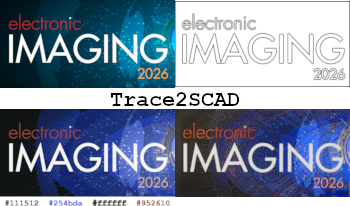
Ironically, it is often useful to manipulate 2D graphics for 3D printing. Trace2SCAD was originally written to convert 2D diagrams into printed structures that could be understood by a blind student feeling the surface. However, by its initial open source release in January 2015, it had already been applied to convert pixel-mapped images into parametric 3D models and 3D-printable image renderings (e.g., lithophanes). The original version was a shell script using a variety of helpers, especially potrace. The new version is pure C++ code using the OpenCV library and incorporating many new features, including the ability to render color images as 3D models to be printed for viewing by reflected light (similar to the filament paintings produced by Hue-Forge). It is also significant that the output generated is not mere 3D shapes, but parametric 3D models coded in the OpenSCAD programming language. This paper describes the functionality and algorithms used in the new Trace2SCAD.
Henry Gordon Dietz, "Trace2SCAD: Converting Images Into Parametric OpenSCAD Models" in Electronic Imaging, 2026, pp 162-1 - 162-8, https://doi.org/10.2352/EI.2026.38.15.COIMG-162