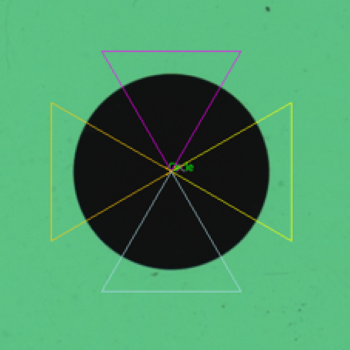
Traditional spatial frequency response (SFR) measurement, as defined by the ISO 12233 slanted-edge methodology, encounters significant measurement uncertainties and operational constraints when applied to wide-angle imaging systems. While recent updates to the standard incorporate polynomial edge-fitting to mitigate geometric warping, the underlying linear-edge model remains inherently limited by directional anisotropy and sampling phase instabilities at critical field angles. Furthermore, the rigid alignment requirements of slanted edges—often compromised by distortion-induced slope deviations—necessitate time-consuming mechanical orientation of the device under test (DUT) or the test target. This paper proposes a robust Circular-Edge SFR framework that synthesizes the broadband spectral coverage of the slanted-edge with the rotational invariance of the Siemens star. By employing a sub-pixel centroiding algorithm and a 60° tangent-aligned sector projection, the proposed method achieves continuous sampling phase integration and simultaneous extraction of SFR in any orientation, e.g., sagittal and tangential. Validation using synthetic equidistant projection models at a 100° field angle demonstrates that the circular-edge maintains high-fidelity measurements where traditional slanted edges collapse due to localized geometric stress. Notably, the superior azimuthal robustness and rotational symmetry of circles eliminate the 'critical angle' sampling failures. The framework provides a high-precision, alignment-independent solution for evaluating the image quality of wide-angle and fisheye camera systems.
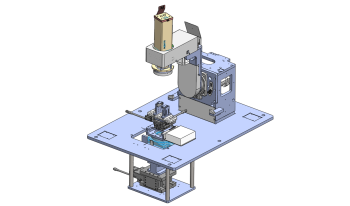
Vehicle-borne cameras vary greatly in imaging properties, e.g., angle of view, working distance and pixel count, to meet the diverse requirements of various applications. In addition, auto parts must tolerate dramatic variations in ambient temperature. These pose considerable challenges to the automotive industry when it comes to the evaluation of automotive cameras in terms of imaging performance. In this paper, an integrated and fully automated system, developed specifically to address these issues, is described. The key components include a collimator unit incorporating a LED light source and a transmissive test target, a mechanical structure that holds and moves the collimator and the camera under test, and a software suite that communicates with the controllers and computes the images captured by the camera. With the multifunctional system, imaging performance of cameras can be conveniently measured at a high degree of accuracy, precision and compatibility. The results are consistent with those obtained from tests conducted with conventional methods. Preliminary results demonstrate the potential of the system in terms of functionality and flexibility with continuing development.