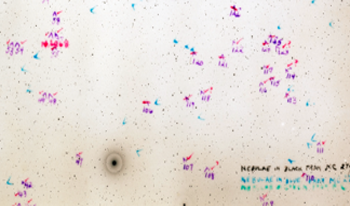
The Harvard Plate Stacks (HPS) Astronomical Photographic Glass Plate Collection comprises over 600,000 glass plate negatives. To support collection preservation and improve accessibility, HPS integrated an advanced imaging system to digitize astronomical features in the emulsion layer, as well as annotations made by pioneering Women Astronomical Computers in the late 19th and early 20th centuries. HPS installed a multispectral imaging system to capture high-quality images of astronomical features dating back to the 1880s, along with their historical annotation, to advance both astronomical and cultural heritage research. This digitization of glass plate negatives builds upon 20 years of advanced imaging methodologies and technologies, using the latest equipment and workflows. This includes new post-processing techniques, data management, and workflows across discipline boundaries by a collaborative team.
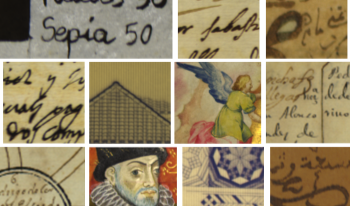
The HYPERDOC database is a publicly available hyperspectral imaging resource for the analysis of historical documents and mock-ups of inks and pigments. It consists of 1681 hyperspectral datacubes, containing millions of reflectance spectra, covering the VNIR (400–1000 nm) and SWIR (900–1700 nm) spectral ranges, including different ink recipes and documents from the 15th to 20th centuries, preserved in two archives in Granada, Spain. We will present the data acquisition process and structure of the database, followed by a live demonstration of its functionality, guiding participants through its use. Additionally, three applications of the database will be summarized, including document binarization, ink classification using machine learning techniques, and ink aging analysis. The HYPERDOC database facilitates the integration of advanced imaging techniques into document analysis and preservation, contributing to the non-invasive study of historical materials.