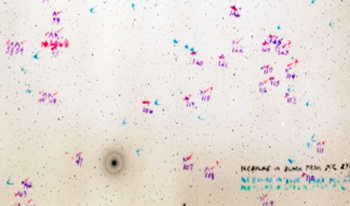
The Harvard Plate Stacks (HPS) Astronomical Photographic Glass Plate Collection comprises over 600,000 glass plate negatives. To support collection preservation and improve accessibility, HPS integrated an advanced imaging system to digitize astronomical features in the emulsion layer, as well as annotations made by pioneering Women Astronomical Computers in the late 19th and early 20th centuries. HPS installed a multispectral imaging system to capture high-quality images of astronomical features dating back to the 1880s, along with their historical annotation, to advance both astronomical and cultural heritage research. This digitization of glass plate negatives builds upon 20 years of advanced imaging methodologies and technologies, using the latest equipment and workflows. This includes new post-processing techniques, data management, and workflows across discipline boundaries by a collaborative team.
Photogrammetry has greatly improved the recording, preservation, and accessibility of cultural heritage in archaeology and scientific research. The increased use of 3D modeling in heritage projects brings about significant challenges, especially in terms of data management. In this context, the challenges involve ensuring that digital models are reliable, traceable, and usable. Often, these concerns are disregarded until they impede access or reuse, affecting the long-term preservation and accessibility of cultural heritage data.

Historic properties face challenges preserving and maintaining their physical heritage, as well as digitally sharing and accessing their history in a virtual environment. They are now utilizing new advanced imaging methods to research their cultural heritage artifacts. Recent advanced imaging in historic Civil War-era houses demonstrated the integration of imaging techniques and data to support conservation of these structures and research into their history and contents. New technical systems, including the latest narrowband multispectral imaging systems and higher resolution cameras, raise major challenges in not only the integration of new technologies, but also the ability to store, manage and access large amounts of data. Integration, preservation, access and collaboration with the image data from this program requires implementation of standardized digitization and data archiving practices.