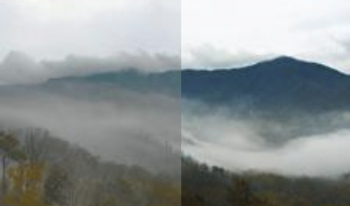
In the present digital age, where visual stimuli dominate our experiences, image quality plays an important role in determining user satisfaction. In this study, we propose a new direction for advancing the field by focusing on personalized image quality assessment, which can benefit a wide range of industries from streaming services and photography postprocessing algorithms to more specialized domains with different image quality requirements, such as medical imaging. We focus on exploring individual preferences, specifically in the context of contrast, one of the key attributes influencing image quality. We employ a twin neural network to predict individual contrast preference, which is particularly effective for enhancing contrast adjustment for observers with distinct and consistent preferences that deviate from the average. We also introduce an intermediate step toward personalization—a faster and less computationally intensive approach for incorporating observer awareness into general quality assessment models. Our findings highlight the importance of accounting for individual preferences and the positive impact of incorporating them into image processing and quality assessment methodologies.

Contrast enhancement which is an important part of digital image processing has been studied for a long time and widely used in various fields such as digital photography or medical imaging. The purpose of contrast enhancement is to improve the overall contrast of the image and details on the local area. Contrast enhancement algorithms are classified into histogram based methods, tone mapping based methods, and retinex theory based methods. Particularly, retinex theory is widely applied at the spatial domain contrast enhancement. In this paper, we propose the contrast enhancement algorithm using the estimated illumination. Different from conventional retinex based algorithms, the estimated illumination serves as the tone mapping criterion and masked with original image. The intensity of estimated illumination image is adaptively modulated according to original image to improve the contrast of image effectively. Experimental results show that both global and local contrast are enhanced simultaneously with the proposed algorithm. Objective assessment using performance metrics also shows that the proposed method has the highest scores compared to the conventional methods.