
The ubiquitous use of mobile devices has underscored the importance of evaluating display visual comfort to reduce eye strain and fatigue. This developed and tested visual comfort model for display visual comfort, taking into account key factors such as ambient illuminance, display luminance, text-background luminance contrast. The 𝑉𝐶𝐴𝐿𝐿 model was built based on three psychophysical experimental datasets: Neutral Colour Combination (NC), Coloured Combination (CC), and Neutral Colour Combination with Dim Ambient Light (NCD), which involved 103 participants spanning various age groups. Two new experiments were conducted to verify the model’ performance. One is to use the model to access displays’ visual comfort, using an LCD and a QD_mini-LED, comparing with the results from various other testing methods. The other experiment was conducted to verify the performance of 𝑉𝐶𝑟𝑒𝑣𝑒𝑟𝑠𝑒 by computing optimal text-background luminance combinations for any display under varying ambient light.
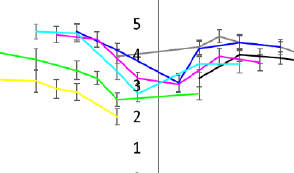
A psychophysical experiment was carried out to investigate visual comfort when reading on three OPPO Find X3s displays at three luminance levels (100, 250 and 500 cd/m2) at five illuminance levels (0, 10, 100, 500 and 1000 lx). Twenty young observers evaluated visual comfort using a 6-category points method. The results showed that observers felt most comfortable at the illuminance of 500 lx or display luminance of 500 cd/m2. There was an interaction between ambient illuminance and display luminance. High ambient light and display brightness levels provide a more pleasant visual experience. In low ambient light, however, the lower the brightness level, the more comfortable it is to see. Regarding the influence of background colour on visual comfort, the observers felt more comfortable having a grey background than white or black colour. When at dim illuminance, the background colour would have a great influence on visual comfort for negative contrast conditions, but when at higher illuminance, different background lightness levels had a great impact on visual comfort for positive contrast conditions. The above findings are very similar to the display luminance levels of 100 and 250 cd/m2.