
Conventional photographic imaging technologies fix the time, interval, and gain of an exposure at the instant of capture, spoiling images if these parameters are not correctly anticipated. Techniques, such as TDCI (Time-Domain Continuous Imaging) allow the integration of an image to be decoupled from the capture of scene data, creating an opportunity to not only adjust the timing and gain of an image after the fact, but manipulate those parameters in previously impossible ways. To facilitate exploration of these new dimensional freedoms, we have created NUTIK, a tool which allows scene data to be captured and computationally post-processed to expose images with user control over the time interval being sampled and the gain of integration, not just for each image rendered but for every site in each rendered image. This paper documents the design and operation of NUTIK, and makes an initial exploration of useful and interesting new photographic techniques enabled by such a tool.
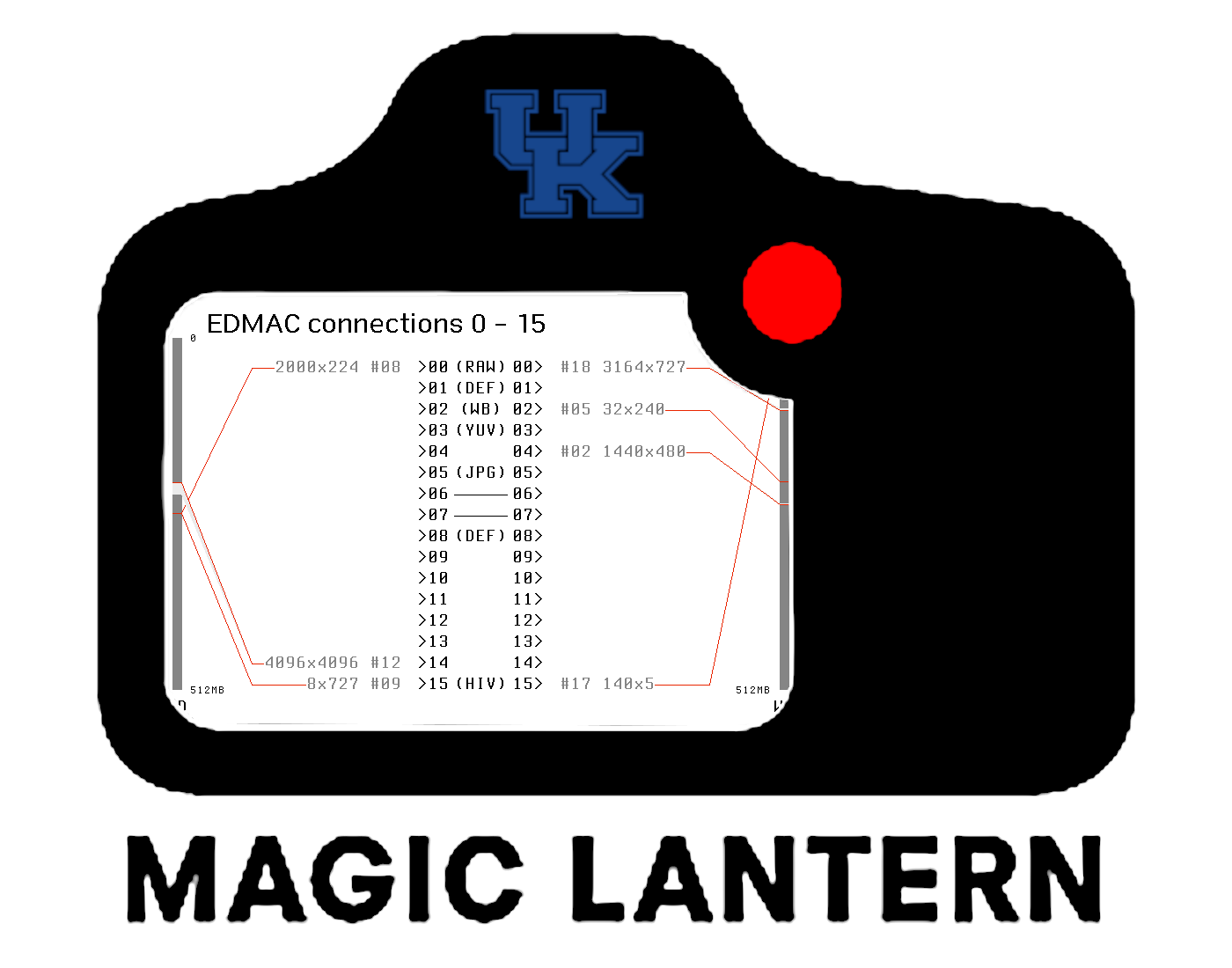
The Magic Lantern project describes itself as ``Magic Lantern is a free software add-on that runs from the SD/CF card and adds a host of new features to Canon EOS cameras that weren't included from the factory by Canon.'' In doing so, they have provided APIs, documentation, and the means to run code on many Canon EOS interchangeable lens cameras, and also useful well-documented interchange formats for data extracted via that access. The current work describes how these facilities can be applied by researchers to develop new imaging techniques on a professional/prosumer camera platform. Specifically, this work covers an attempt to use the Magic Lantern development tools to manipulate a cameras' Embedded Direct Memory Access engine (EDMAC) to perform on-the-fly frame diffing, and/or to the use of the project's MLV format for raw sensor data streams to extract data from the relatively large, high-performance sensor of a prosumer camera as input for alternative processing pipelines.