
The use of Virtual Reality (VR) in education is rapidly increasing due to the immersive and interactive environments it provides that support the nature of engineering learning experiences that can be difficult, hazardous, or resource-intensive. However, this rapid growth of VR-based educational systems has produced a fragmented literature. This paper presents a scoping review of 32 peer-reviewed studies published between 2012 and 2025 that examine the use of VR in engineering education contexts. Using a structured extraction and descriptive synthesis approach, the review analyzes trends across engineering domains, learning objectives, VR modalities, instructional roles, learner populations, and evaluation methods. The results reveal a strong emphasis on procedural learning objectives, including laboratory skill rehearsal, equipment operation, and safety-oriented training. Despite this focus on procedural tasks, evaluation practices are frequently limited to short-term, perception-based measures, highlighting a structural misalignment between learning objectives and assessment methods. Furthermore, VR is most often deployed as a supplementary instructional tool rather than as a fully integrated component of course design.
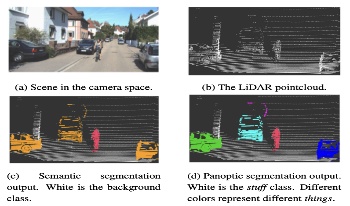
This survey provides a comprehensive overview of LiDAR-based panoptic segmentation methods for autonomous driving. We motivate the importance of panoptic segmentation in autonomous vehicle perception, emphasizing its advantages over traditional 3D object detection in capturing a more detailed and comprehensive understanding of the environment. We summarize and categorize 42 panoptic segmentation methods based on their architectural approaches, with a focus on the kind of clustering utilized: machine learned or non-learned heuristic clustering. We discuss direct methods, most of which use single-stage architectures to predict binary masks for each instance, and clustering-based methods, most of which predict offsets to object centers for efficient clustering. We also highlight relevant datasets, evaluation metrics, and compile performance results on SemanticKITTI and panoptic nuScenes benchmarks. Our analysis reveals trends in the field, including the effectiveness of attention mechanisms, the competitiveness of center-based approaches, and the benefits of sensor fusion. This survey aims to guide practitioners in selecting suitable architectures and to inspire researchers in identifying promising directions for future work in LiDAR-based panoptic segmentation for autonomous driving.