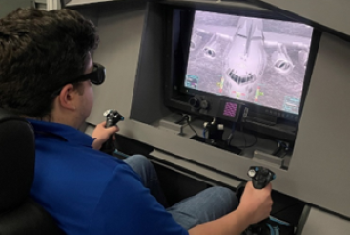
With increased use of stereoscopic devices, it is important to emulate real-world practices and study physiological and perceptual effects over long viewing periods. Stereoscopic channels may not always be perfectly aligned, and alignment may shift with use. In this experiment, we investigated the impact of vertical misalignment between left and right-eye imagery during stereoscopic remote vision system (sRVS) use. For three-hour periods, participants performed a simulated aerial refueling task. Their goal was to fly the boom into a receiver aircraft receptacle as quickly as possible without scratching the aircraft. After each successful connection, the participant monitored several systems, which required changes to version and vergence position. Binocular eye position was recorded throughout the task. While performance increased over time, the survey results showed that participants were experiencing strain over time and with increased misalignment. However, only one oculomotor change – horizontal vergence – was observed over time. Time series analysis revealed a more complex relationship between pupil size and time within each block. To further investigate the relationship between eye movement behavior and vertical misalignment, a principal component analysis was performed. These results identified eye movement behaviors that are sensitive to changes in stereoscopic misalignment and have the potential to be used to indicate oncoming fatigue. This experiment highlights the importance of considering the visual system as a whole when assessing stress and not simply relying on performance metrics.