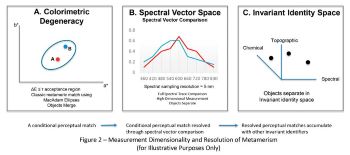
Authentication of cultural heritage objects can be understood as a statistical decision problem in which the objective is to minimize the probability of false identification. Traditional approaches rely on provenance records and expert judgment, while scientific analyses are typically applied as independent examinations without formal integration into a unified decision framework. This paper proposes a multi-factor authentication (MFA) model in which intrinsic physical characteristics, the object’s inherent reality, are treated as object-intrinsic signals that can be combined into evidence channels, termed authentication factors. When such factors are statistically independent, the probability of false identification decreases multiplicatively6,7,8, providing a formal mechanism for achieving high-confidence authentication. We introduce the concept of invariant physical factors, stable, measurable properties arising from an object’s material composition, structure, and fabrication history. These factors can serve as independent evidence channels that become inputs to an MFA framework. The factors are assembled into identity vectors that enable statistical comparison between objects. A key implication of this model is that authentication measurements accumulate over time, forming a structured dataset that supports both forward authentication decisions and backward-looking analysis across collections.