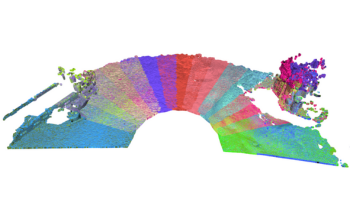
Accurate registration of subsea Light Detection and Ranging (LiDAR) point clouds is critical for offshore metrology, where millimeter-level errors can significantly impact operational cost and risk. This study evaluates automated registration methods for static scan positions acquired by Kraken Robotics systems. Two approaches were implemented in Open3D: a hierarchical tree-based Iterative Closest Point (ICP) method and a pose-graph multiway registration framework. The methods were tested on multiple real subsea datasets containing 19–33 high-density scans per subsea scene and on synthetic datasets generated with Digital Imaging and Remote Sensing Image Generation (DIRSIG) to enable ground-truth evaluation. Results show that multiway registration provides improved global consistency, lower adjacent-scan Root Mean Square Error RMSE, and reduced processing time compared to tree-based ICP. Ground-truth analysis demonstrated sub–sampling-level performance, corresponding to an expected 1–4 mm alignment accuracy for real datasets. Global coarse registration provided no measurable benefit for well-initialized static surveys. The final analysis demonstrates that multiway registration enables accurate, efficient, and fully automated subsea LiDAR alignment, reducing manual effort and improving metrology reliability.

In this work, we present a method to estimate the pose of teeth in pathological dental models. For each tooth of a pathological model, we aim at computing its orientation and position with respect to a healthy dentition. The proposed method is based on the registration of a reference model on a patient-specific 3D segmented mesh. Dental features, such as the arch forms and their types, are derived. These features, combined with registration information, allow our system to propose a plausible target dental arrangement and thus estimate the pose of each tooth. The key contributions of this work are (a) the use of a registered reference model to derive dental features and quantify orthodontic disorders and (b) the automatic estimation of a target dental arrangement.