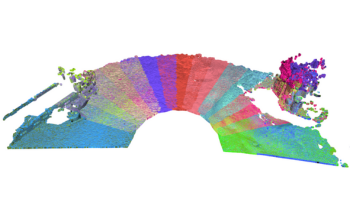
Accurate registration of subsea Light Detection and Ranging (LiDAR) point clouds is critical for offshore metrology, where millimeter-level errors can significantly impact operational cost and risk. This study evaluates automated registration methods for static scan positions acquired by Kraken Robotics systems. Two approaches were implemented in Open3D: a hierarchical tree-based Iterative Closest Point (ICP) method and a pose-graph multiway registration framework. The methods were tested on multiple real subsea datasets containing 19–33 high-density scans per subsea scene and on synthetic datasets generated with Digital Imaging and Remote Sensing Image Generation (DIRSIG) to enable ground-truth evaluation. Results show that multiway registration provides improved global consistency, lower adjacent-scan Root Mean Square Error RMSE, and reduced processing time compared to tree-based ICP. Ground-truth analysis demonstrated sub–sampling-level performance, corresponding to an expected 1–4 mm alignment accuracy for real datasets. Global coarse registration provided no measurable benefit for well-initialized static surveys. The final analysis demonstrates that multiway registration enables accurate, efficient, and fully automated subsea LiDAR alignment, reducing manual effort and improving metrology reliability.