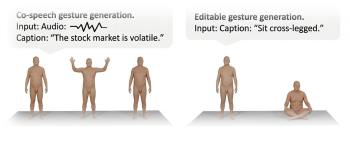
Human motion language models (Human-MLMs) have shown that text, speech, and motion can be brought into a shared generative framework. Most MLMs, however, encode body motion primarily through joint-centric SMPL features defined with respect to a fixed reference pose. While effective, this view compresses rich human movement into a single vocabulary and can under-represent local structures and movement co-dependencies of body part biomechanics. In this paper, we present JaBOR (Joint-aligned Bone Orientation Representation), a hierarchical bone-centric motion representation designed as a general plug-in for Human-MLMs. JaBOR complements conventional joint-based motion features by expressing each bone in a locally rotation-normalized coordinate frame defined by four structurally selected keypoints: Pivot, Free, Axis, and Plane. Combined with compositional body-part tokenization and multi-representation training, JaBOR exposes LLMs to richer motion vocabularies without changing the high-level goal of existing MLM pipelines. We evaluate JaBOR in a preliminary motion tokenization-level study by integrating it into three Human-MLM pipelines: MotionGPT, MotionGPT3, and LoM. On the reported benchmarks, JaBOR improves Fréchet Inception Distance (FID) from 0.232 to 0.211 for MotionGPT and from 0.208 to 0.181 for MotionGPT3, while preserving diversity in two of the three reported settings. These results support the view that bone-based motion representation is a useful complementary signal for motion-language modeling. We position exercise form coaching and broader multimodal motion translation as promising future directions enabled by this representation.