 Find this author on Google Scholar
 Find this author on PubMed


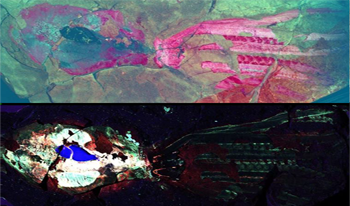
Over approximately the last 20 years, advances in scientific instrumentation have made many analytical techniques more readily accessible to the broader scientific community. This has empowered paleontologists, archeologists, conservators, scholars and preservation specialists to acquire new data types from multiple techniques, revealing important information about cultural and natural heritage objects, such as ancient documents and fossils. As such, the volume of data and metadata that can be acquired has dramatically increased, putting increased strain on researchers to process, analyze, interpret, archive and manage this data. This paper discusses the advances of synchrotron x-ray fluorescence (XRF) imaging and multispectral imaging in paleontological research to demonstrate the challenges of handling the data that can now be generated for such an object. It also addresses how facilities such as synchrotrons are generating big data, and how data from multiple techniques can be analyzed in a multimodal framework.
Nicholas Edwards, Samuel M. Webb, Michael B. Toth, "Integrating Multimodal Imaging Data Flow in Paleontology" in Archiving Conference, 2026, pp 100 - 105, https://doi.org/10.2352/issn.2168-3204.2026.23.1.20